Background:
Borderline personality disorder (BPD) is associated with significant psychological distress and high healthcare use. Both dialectical behaviour therapy (DBT) and schema therapy (ST) are evidence-based treatments, but they had not previously been directly compared in a randomised clinical trial.
Aim:
To compare the effectiveness of DBT and schema therapy in reducing BPD symptoms and improving clinical outcomes in patients with BPD.
Setting:
The study was conducted at a tertiary outpatient treatment centre in Lübeck, Germany, specialising in treating severely affected BPD patients.
Methods:
A single-centre, randomised, rater-blind clinical trial included 164 adults with BPD. Participants were assigned to either DBT (n = 83) or schema therapy (n = 81). Treatment consisted of weekly individual and group sessions over 1.5 years. The primary outcome was BPD symptom severity at 1-year follow-up.
Results:
Both DBT and schema therapy led to significant improvements in BPD symptoms, with large effect sizes in both groups. There was no statistically significant difference between the two treatments at 1-year follow-up. Some differences were noted in specific areas such as anger and treatment retention, but overall outcomes were similar.
Conclusions:
Both DBT and schema therapy are effective treatments for BPD, even in severely affected patients with comorbidities. Neither treatment showed clear superiority, suggesting both can be used successfully in clinical practice. Further research is needed to determine whether they are equivalent or better suited to different patient subgroups.
Keywords:
borderline personality disorder; dialectical behaviour therapy; schema therapy; randomised controlled trial; psychotherapy outcomes.
Click below to open PDF file Full Screen:
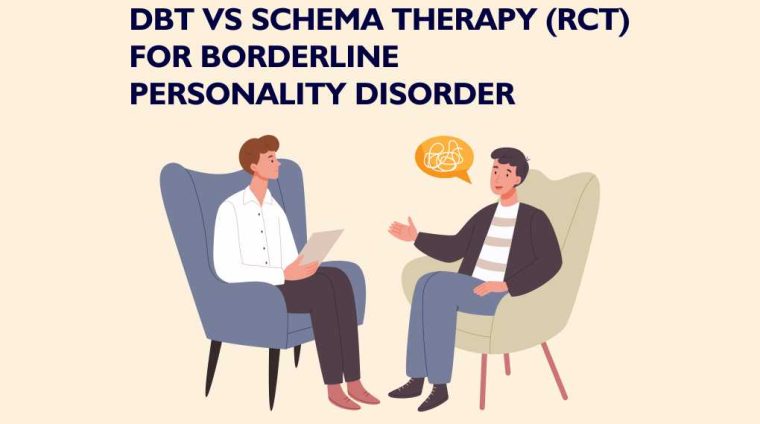
DBT vs Schema Therapy (RCT) for Borderline Personality Disorder